
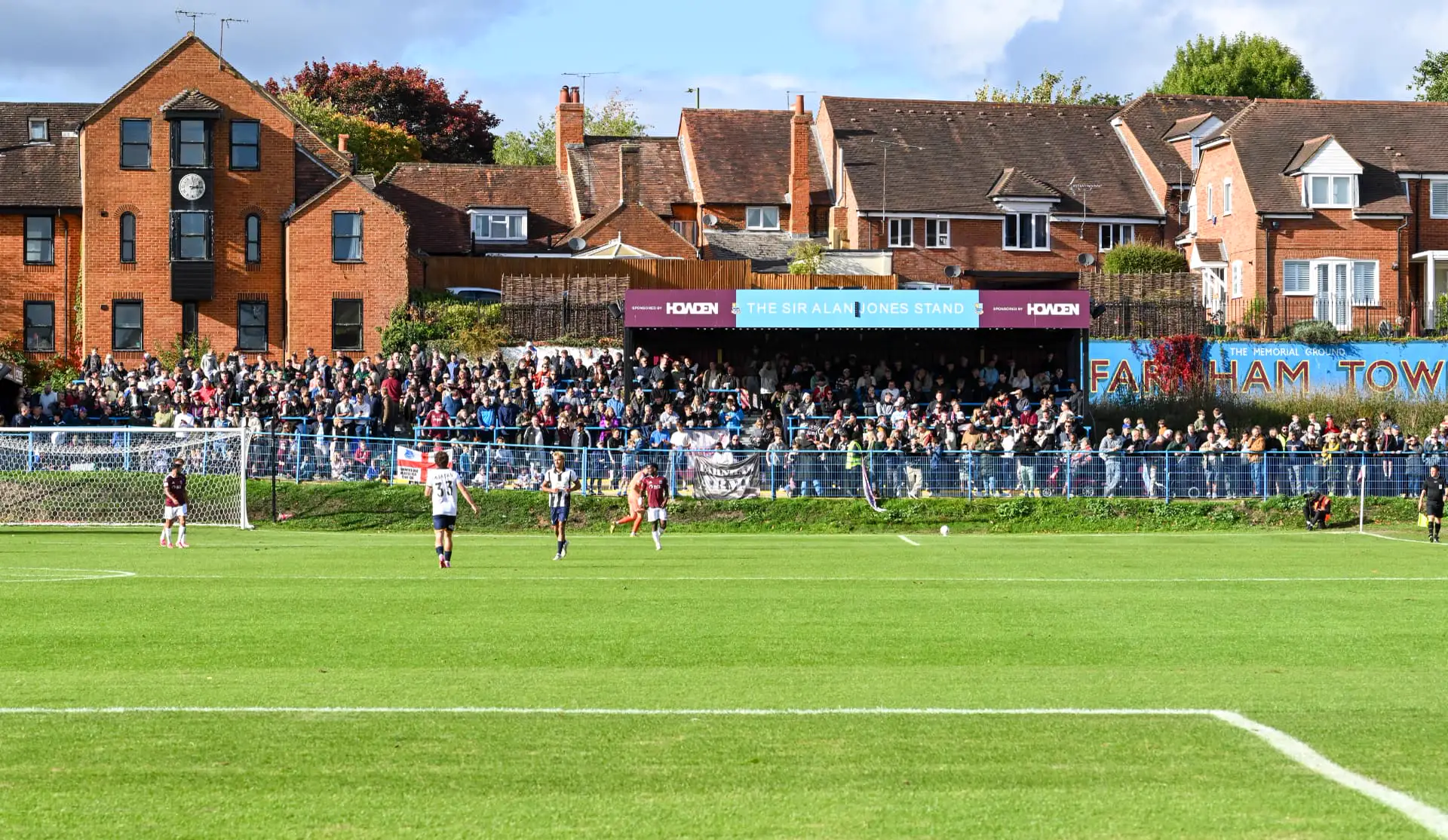
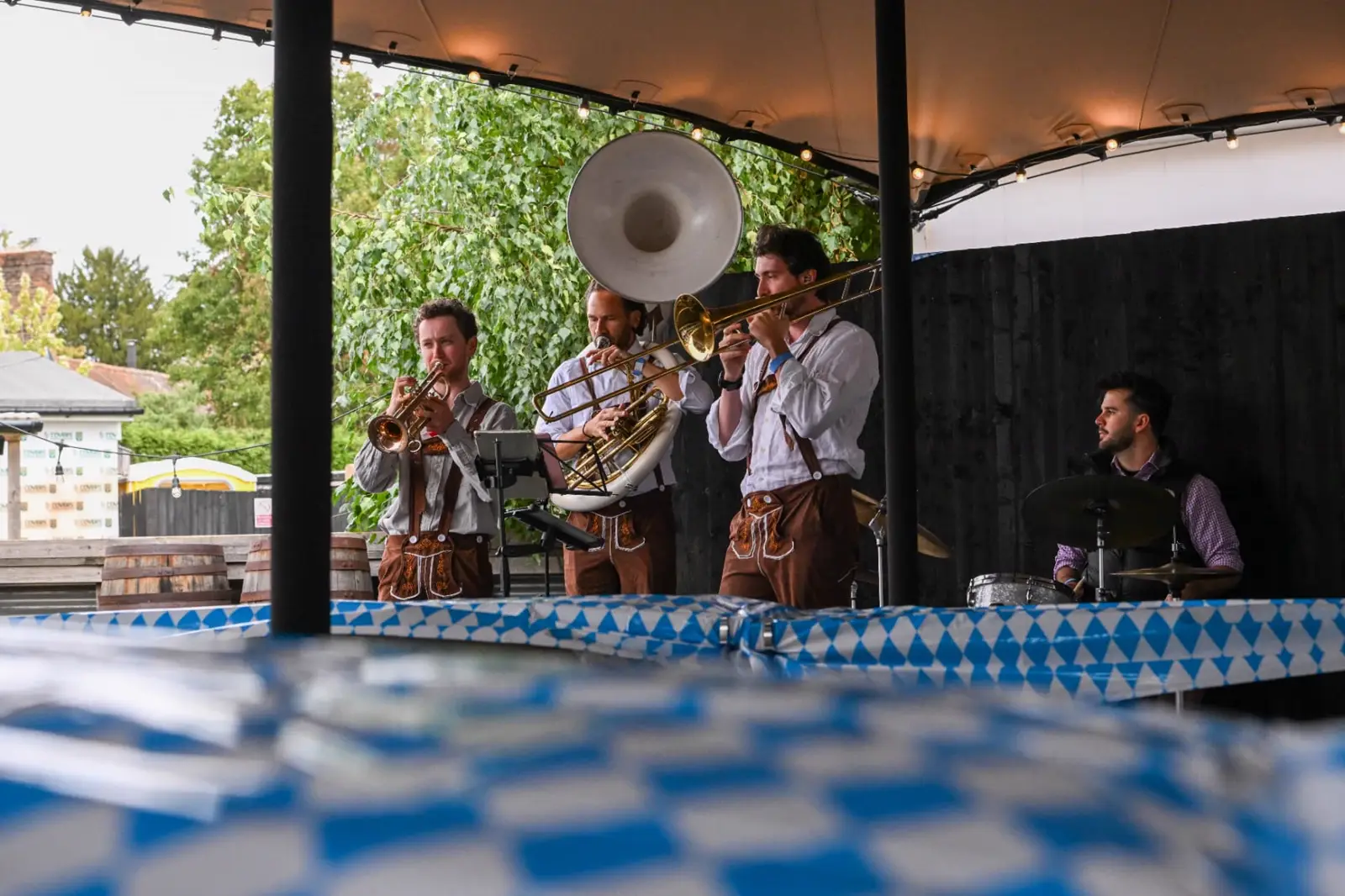
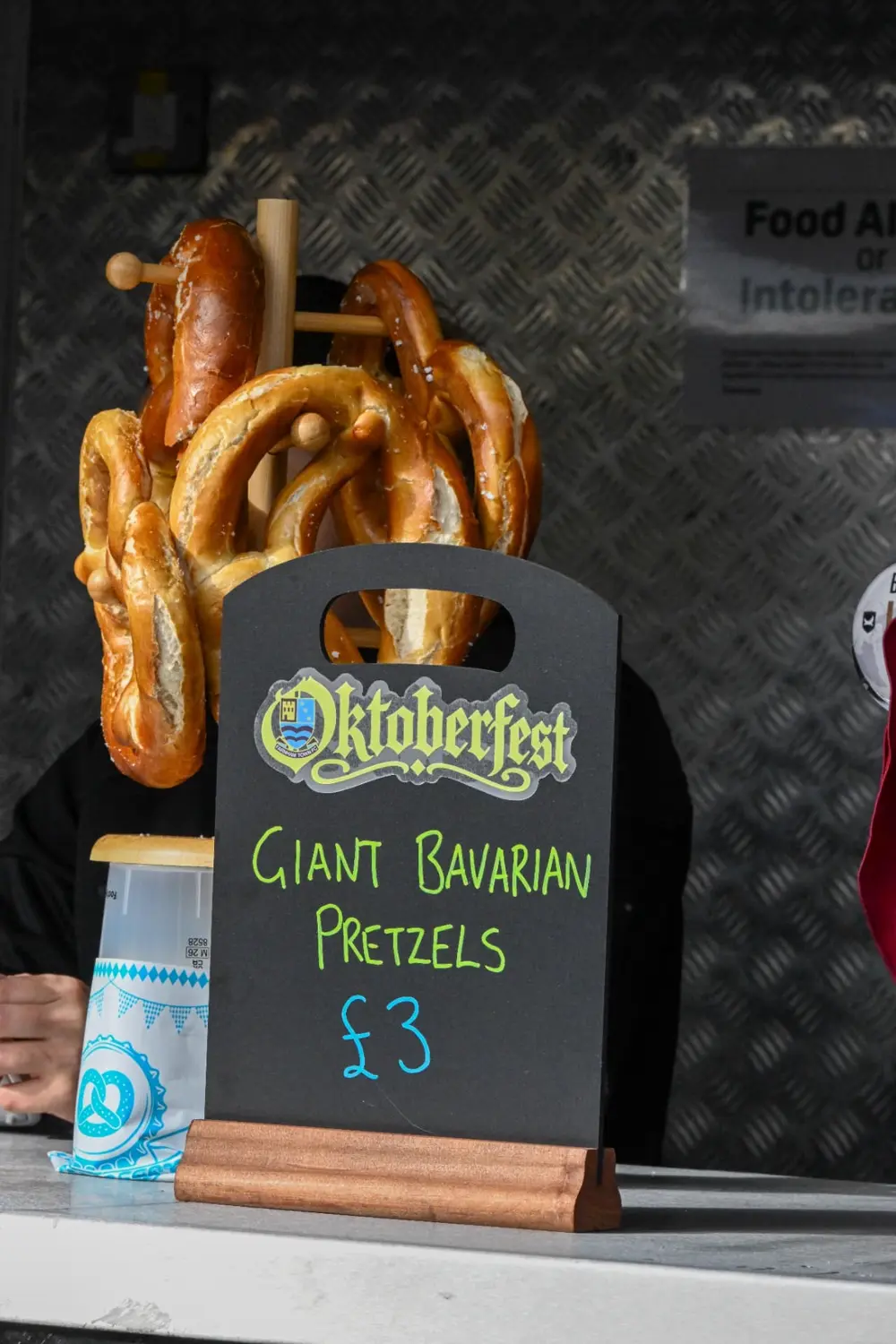
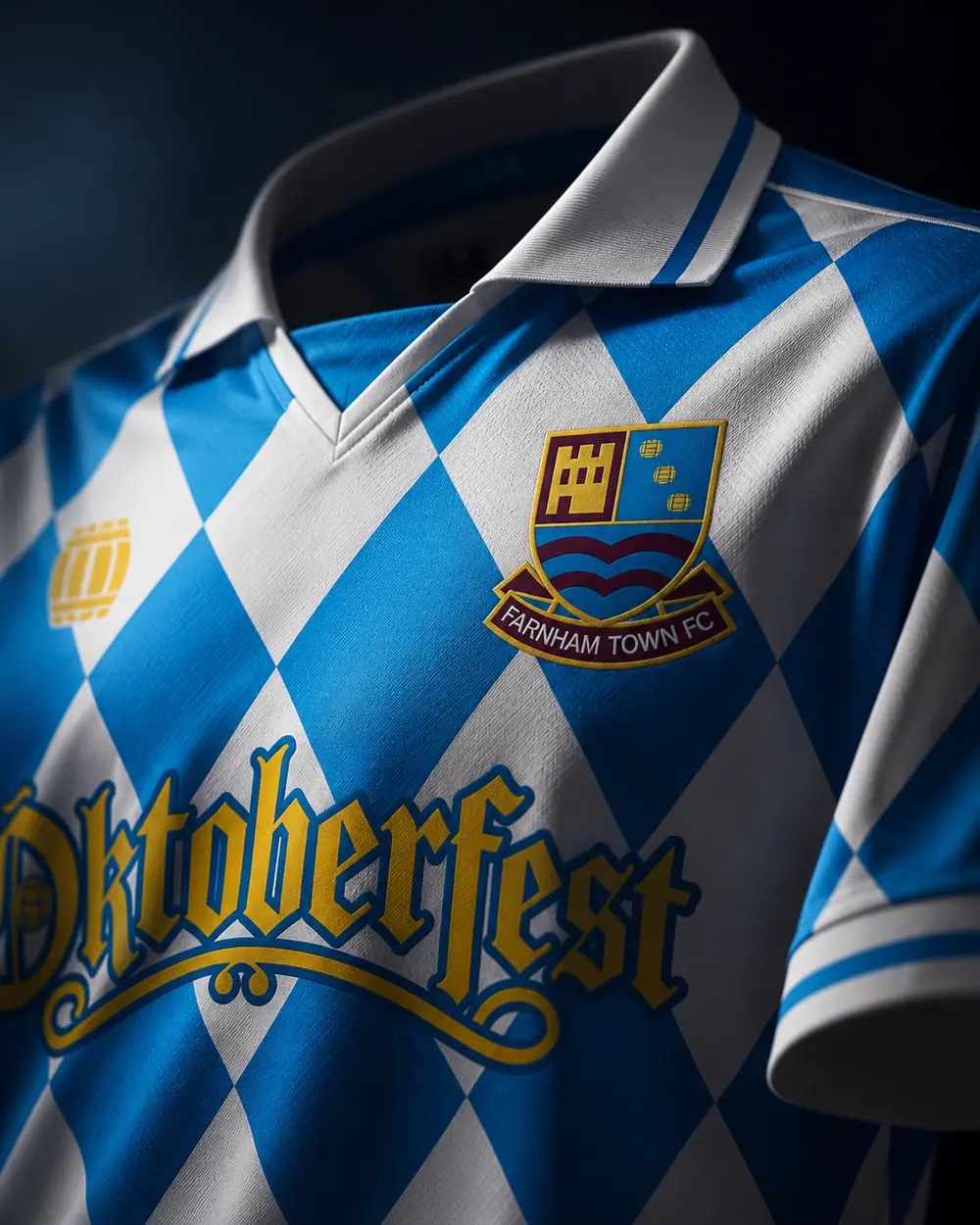
Farnham Town lost 2–1 to Salisbury on 10 October. Off the pitch it was one of the best days the club has had. The ground was dressed as a beer hall, with an oompah band, long communal tables, two-pint steins, currywurst and giant pretzels, and a limited-edition shirt on sale before the day.
The point was not the theme. It was what the theme did to how long people stayed.
Against the average competitive home game this season.
£22.97 against a season average of £19.21.
Against the average game, including shirt pre-sales.
The problem it was solving
Football gives a club very little time with its customers. Most supporters arrive fifteen minutes before kick-off and leave at the final whistle. Everything a club sells inside the ground has to be sold in that window, plus half-time.
So the day was built to get people in early and keep them there. Fans were encouraged to collect shirts at the ground, the band started well before kick-off, and the tables gave people somewhere to sit and stay.
Where the money came from
Against the average of the club’s six competitive home games this season, every category that happens inside the ground moved sharply. Drink was up 45%, with 1,817 pints poured. Food was up 71%. Admissions and hospitality together were up 28%, and merchandise was 3.7 times the usual figure.
What did not move was the gate. Ticket spend per head was £8.31, slightly below the season average of £8.55. The whole uplift came from what people spent after they were through the turnstile.
The crowd was 31% bigger. The revenue was 57% bigger. The difference was dwell time.
The two-pint stein
A typical supporter buys a pint before kick-off and queues again at half-time. Every queue is a sale that might not happen. A two-pint stein takes the second purchase forward to the first, halves the trips to the bar and raises the value of every transaction that does happen.
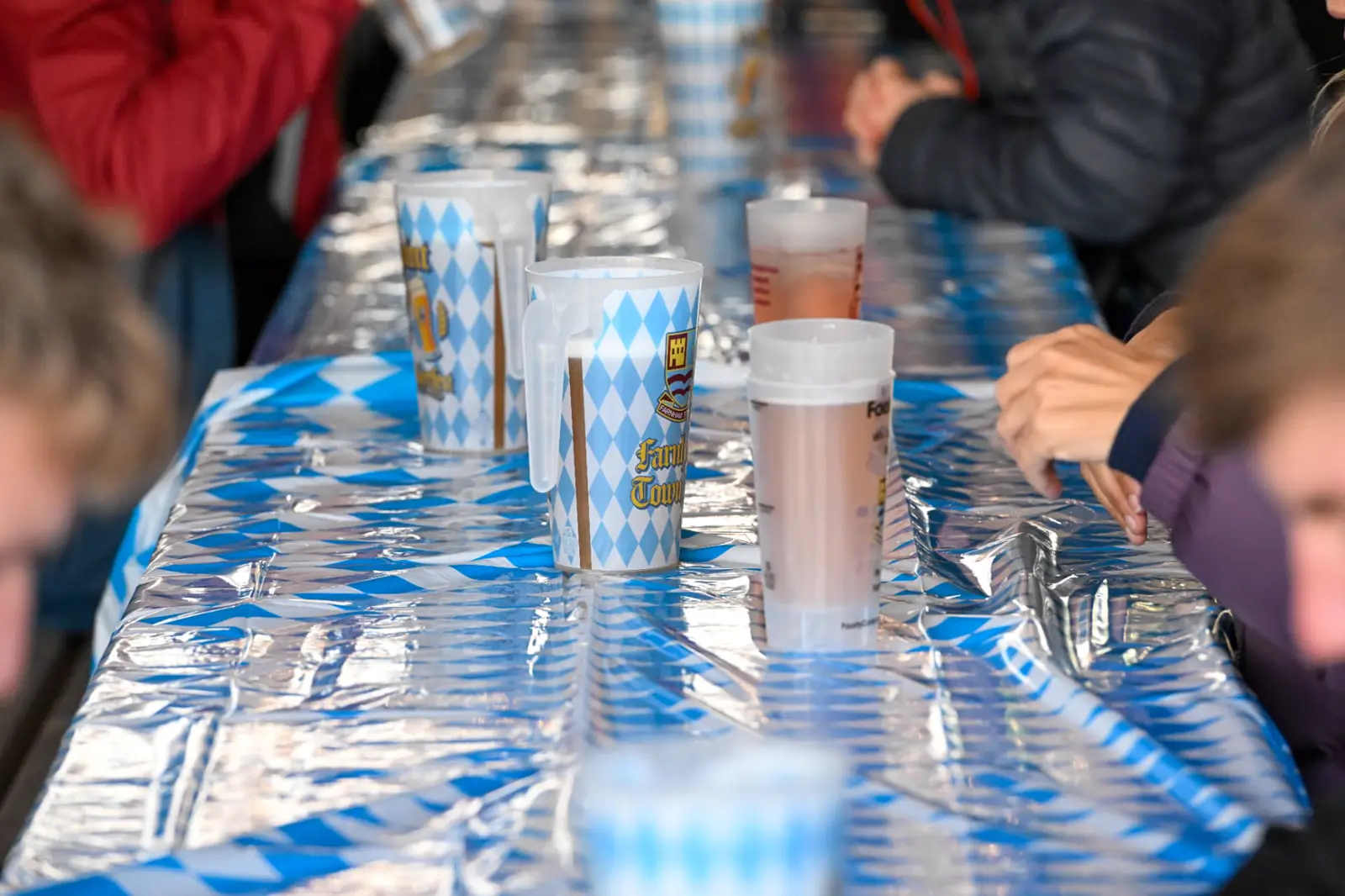
A shirt that sold the shop
The club ordered 50 Oktoberfest shirts and sold out within 24 hours, with orders coming from well beyond Farnham. A second run followed. The limited shirt did not take sales away from the regular range: ordinary club shop sales on the day were also above the usual figure.
Fewer people, nearly the same money
The season’s biggest gate so far was Torquay, at 2,019. Oktoberfest drew 1,508 and came within £178.50 of the same revenue, taking 33% more per head. Torquay’s lead came from ticketing alone. Oktoberfest beat it on drink, food, merchandise and hospitality.
1,817 pints, against the average home game.
Against the average home game.
Than the season-high gate, for almost the same revenue.
What travels to any division
None of this depends on the size of the club. A themed day, a reason to arrive early, a larger serve and a limited product are available to a League Two club and a Championship club as readily as to a non-league one. The absolute sums scale with the crowd. The percentages are the part worth copying.